Lighting Solutions for Modern Living Spaces
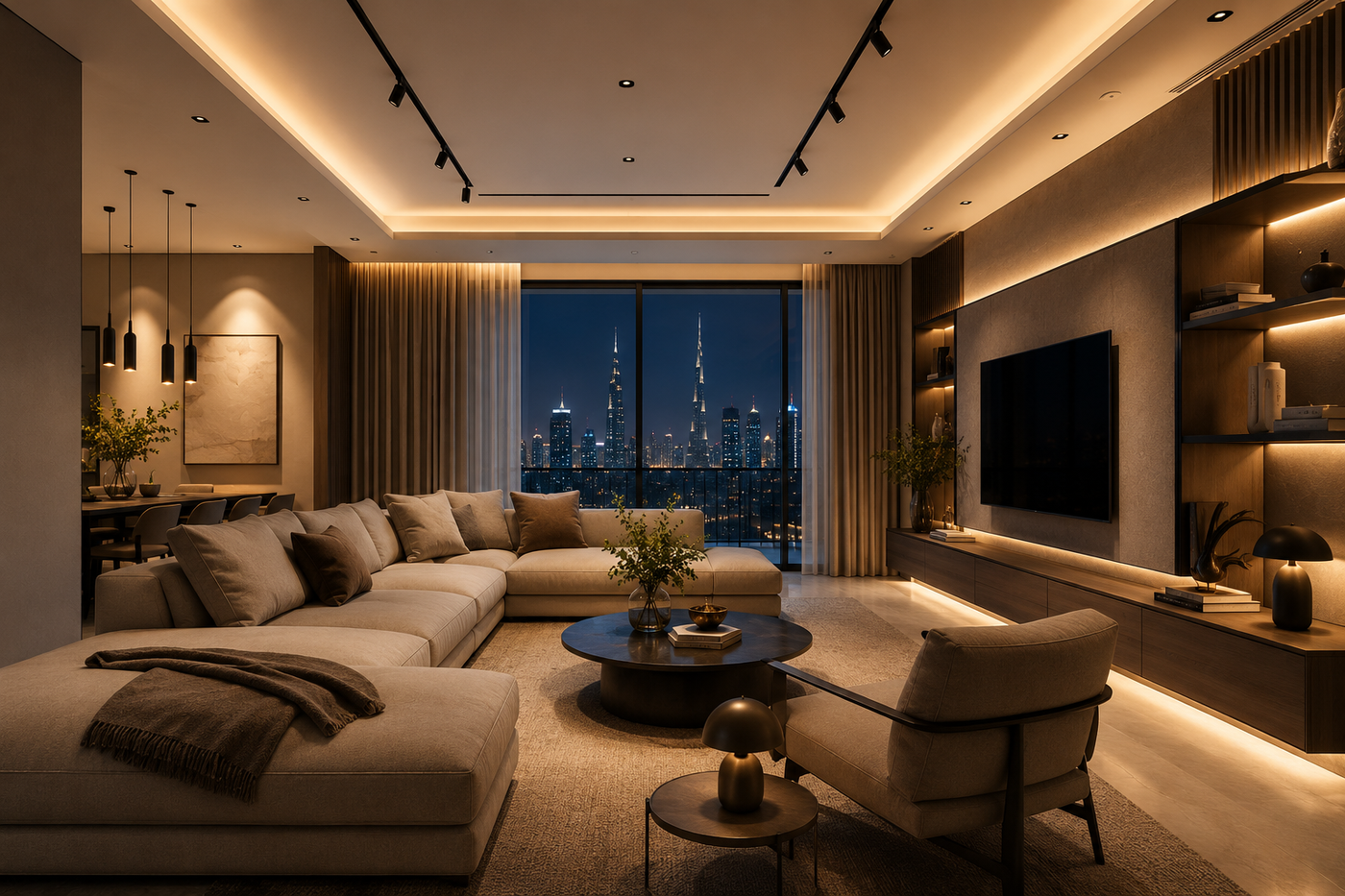
Lighting Solutions for Modern Living Spaces
Lighting plays a much bigger role in modern living spaces than many people realize. It is not only a functional necessity, but also one of the most important elements affecting atmosphere, comfort, visual balance, and the overall living experience.
In residential projects across the GCC region, lighting has become an essential part of interior planning. From apartments and villas to hospitality and commercial spaces, the right lighting system can completely change how a space feels and functions.
Understanding the Purpose of Lighting
A successful lighting design begins with understanding how the space will actually be used.
Different areas within a home require different lighting approaches. A living room may need layered lighting that supports relaxation, conversation, and entertainment. A kitchen requires more functional lighting for visibility and daily use. Bedrooms often benefit from softer lighting that creates a calm and comfortable atmosphere.
Instead of relying on a single ceiling light, modern spaces usually combine multiple lighting sources to create depth and flexibility.
This includes ambient lighting, task lighting, accent lighting, decorative lighting, and hidden architectural lighting integrated into ceilings, walls, shelving, or cabinetry.
Creating Atmosphere Through Layered Lighting
One of the key trends in modern interior design is layered lighting.
Layered lighting allows a space to feel more dynamic and adaptable throughout the day. Warm hidden LED strips, soft wall lighting, pendant lights, floor lamps, and focused spotlights can work together to create a more refined environment.
In GCC residential spaces, warm lighting tones are especially popular because they create a comfortable and luxurious feeling without making the space feel overly cold or clinical.
Lighting also helps define visual focus within a room. It can highlight textures, materials, artwork, architectural details, or decorative elements while maintaining balance within the overall design.
Balancing Design and Functionality
Modern lighting should always balance aesthetics with practical functionality.
A visually beautiful lighting design may still fail if it creates glare, uneven brightness, or uncomfortable living conditions. Lighting needs to support real daily use.
For example, living rooms require flexible lighting levels for different activities. Dining spaces should create warmth without becoming too dark. Bedrooms should support relaxation while still providing enough visibility when needed.
For workspaces and kitchens, proper brightness and color temperature become even more important.
Good lighting design improves not only the appearance of a space, but also the comfort and usability of everyday living.
Lighting and Material Coordination
Lighting should never be planned separately from interior materials.
The same light can look completely different depending on surrounding surfaces such as wood, marble, fabrics, metal finishes, or wall textures. Warm lighting usually works well with neutral materials, soft fabrics, and natural finishes commonly used in GCC interiors.
Reflective materials, glass surfaces, and polished stone can also influence how lighting behaves within a room.
Because of this, lighting selection should always be coordinated together with furniture, wall finishes, flooring, cabinetry, and decorative elements.
When all materials and lighting are planned together, the final space feels more cohesive and balanced.
Smart Lighting and Modern Living
Technology is also changing how lighting systems are used in modern homes.
Smart lighting systems now allow users to adjust brightness, color temperature, and lighting scenes depending on time of day or activity. This creates more flexibility and convenience for modern lifestyles.
In luxury apartments and villas across the GCC market, integrated lighting control systems are becoming increasingly common.
However, technology should support comfort rather than complicate it. A good lighting system should remain intuitive, practical, and easy to maintain over time.
The Importance of Local Execution
Lighting projects often involve multiple technical and operational details beyond product selection.
Ceiling conditions, electrical planning, installation coordination, site access, and finishing details all affect the final result. Even small alignment or installation issues can impact the visual quality of a space.
This is why local execution support becomes important, especially for overseas suppliers or international project teams entering the GCC market.
A local execution team can help coordinate installation, communicate with contractors, solve technical issues on-site, and ensure the final lighting effect matches the original design intention.
Lighting as Part of the Living Experience
Today, lighting is no longer treated as a separate technical category. It has become part of the overall living experience.
The most successful spaces are those where lighting, furniture, materials, and layout work together naturally. Instead of attracting attention individually, every element supports the atmosphere and functionality of the space as a whole.
For residential and hospitality projects across the GCC, this integrated approach is becoming increasingly important.
Clients are no longer looking only for products. They are looking for complete living solutions that combine design, comfort, functionality, and execution.
Conclusion
Lighting is one of the most powerful tools in modern interior spaces. It shapes atmosphere, supports functionality, highlights materials, and improves the overall living experience.
Successful lighting solutions require more than choosing attractive fixtures. They require careful planning, material coordination, practical execution, and an understanding of how people actually live within a space.
GCI Living supports lighting and living solutions across the GCC market, helping projects combine aesthetics, practicality, and local execution into a more complete and refined environment.